


Less Visible Tech, More Control
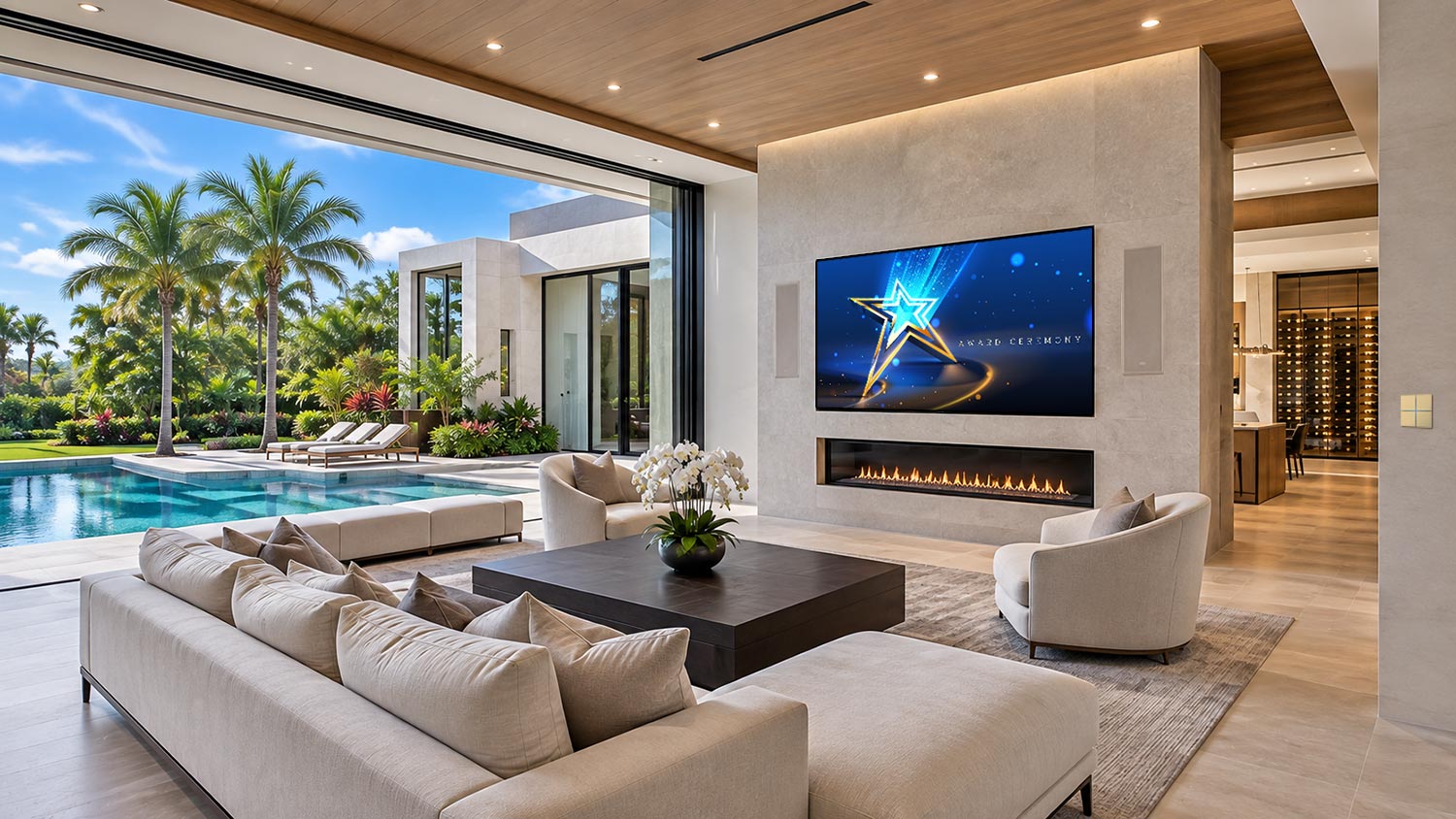
Luxury homes are becoming more technologically sophisticated. But that does not mean they need to look more technological.
In many of Orlando’s most beautifully designed homes, technology is present, but not the focal point.
Speakers disappear into walls and ceilings. Motorized shades retract into concealed pockets. Large video displays become part of the interior design instead of dominating it. Rows of switches are replaced by elegant controls. Voice technology becomes nearly invisible. Equipment racks containing the systems that power the home are located well away from primary living spaces.
For homeowners, architects, and interior designers, this is one of the most compelling developments in luxury home technology: enjoying more performance, more automation, and more control with less visual intrusion.
➡️ LEARN MORE: Smart Home Systems in Orlando, Florida
What Is Invisible Home Technology?
Invisible home technology is a design approach that minimizes the visual impact of electronics, wiring, controls, and mechanical components throughout the home.
Some technologies can literally disappear. Speakers can be installed behind finished walls and ceilings. Automated window treatments can retract into recessed ceiling pockets. Wiring, processors, amplifiers, and network equipment can be centralized outside living spaces.
Other technologies cannot completely disappear, but they can be made remarkably discreet. In-wall speakers, minimalist keypads, architectural microphones, and carefully integrated displays allow the interior design to remain the visual priority.
And sometimes, hiding the technology isn’t the answer at all. A beautifully designed speaker or control can become an architectural feature in its own right.
This leads to an important principle in luxury technology design: hide what should disappear. Integrate what should be discreet. Make beautiful what deserves to be seen.
Hidden and Architectural Speakers: Extraordinary Sound Without the Visual Clutter
Whole-home audio presents an interesting design challenge.
Homeowners may want beautiful music throughout the house, and exceptional performance in entertainment spaces, but large conventional speakers may not complement the architecture or interior design.
Today’s architectural audio technologies provide far more options.
Sonance Invisible Speakers: Technology You Hear but Never See
For rooms where even a speaker grille would interrupt the design, Sonance Invisible Series speakers can take concealment to another level.
These speakers are installed into walls or ceilings and covered with compatible finish materials. Once installation and finishing are complete, no conventional speaker grille competes with the decor.
The room remains visually uninterrupted while music emerges naturally into the space.
This approach can be especially appealing in sophisticated living rooms, dining rooms, kitchens, bedrooms, galleries, hallways, and other areas where the interior designer wants clean walls and ceilings.
Bowers & Wilkins Architectural Speakers: Audiophile Heritage Built Into the Home
Not every architectural speaker needs to disappear completely.
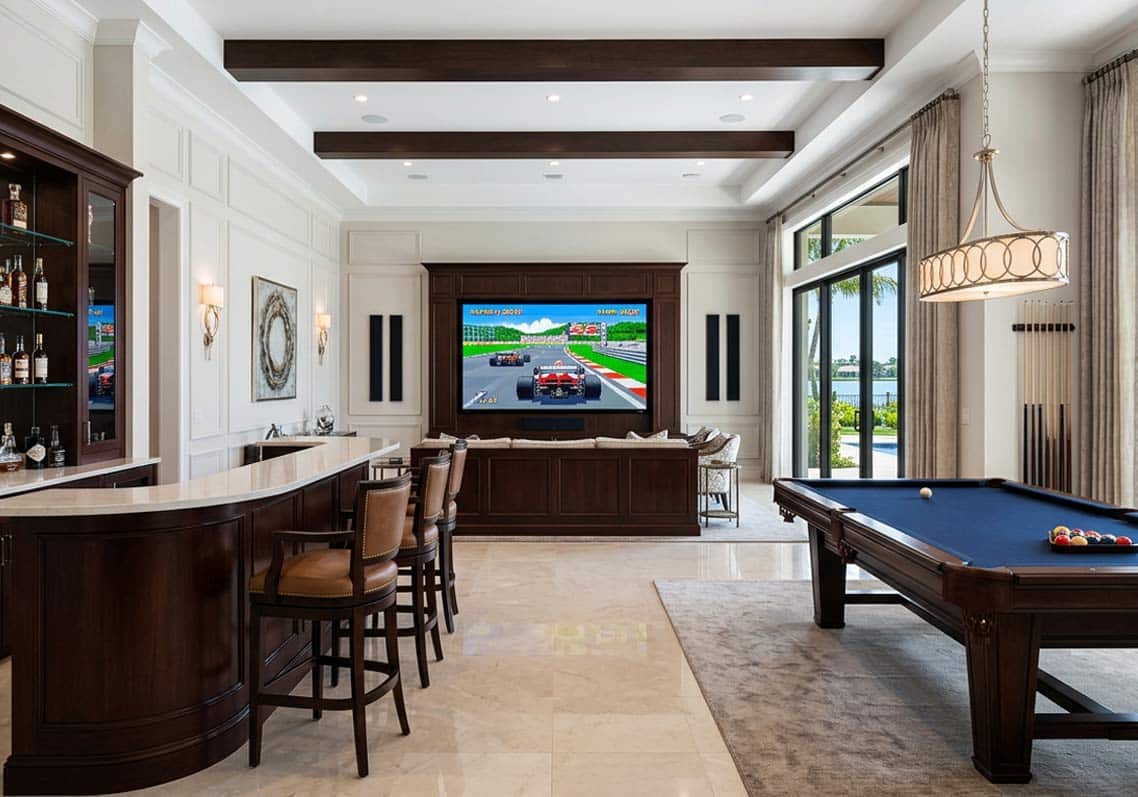
Bowers & Wilkins offers in-wall and in-ceiling architectural loudspeakers that allow homeowners to experience the company’s renowned approach to high-performance audio without requiring conventional speakers to occupy floor space.
This can be attractive in sophisticated media rooms, great rooms, and home theaters where sound quality matters enormously but the homeowner and designer want the audio system hidden.
Wisdom Audio: High Performance Meets Architectural Integration
Some projects demand another level of performance.
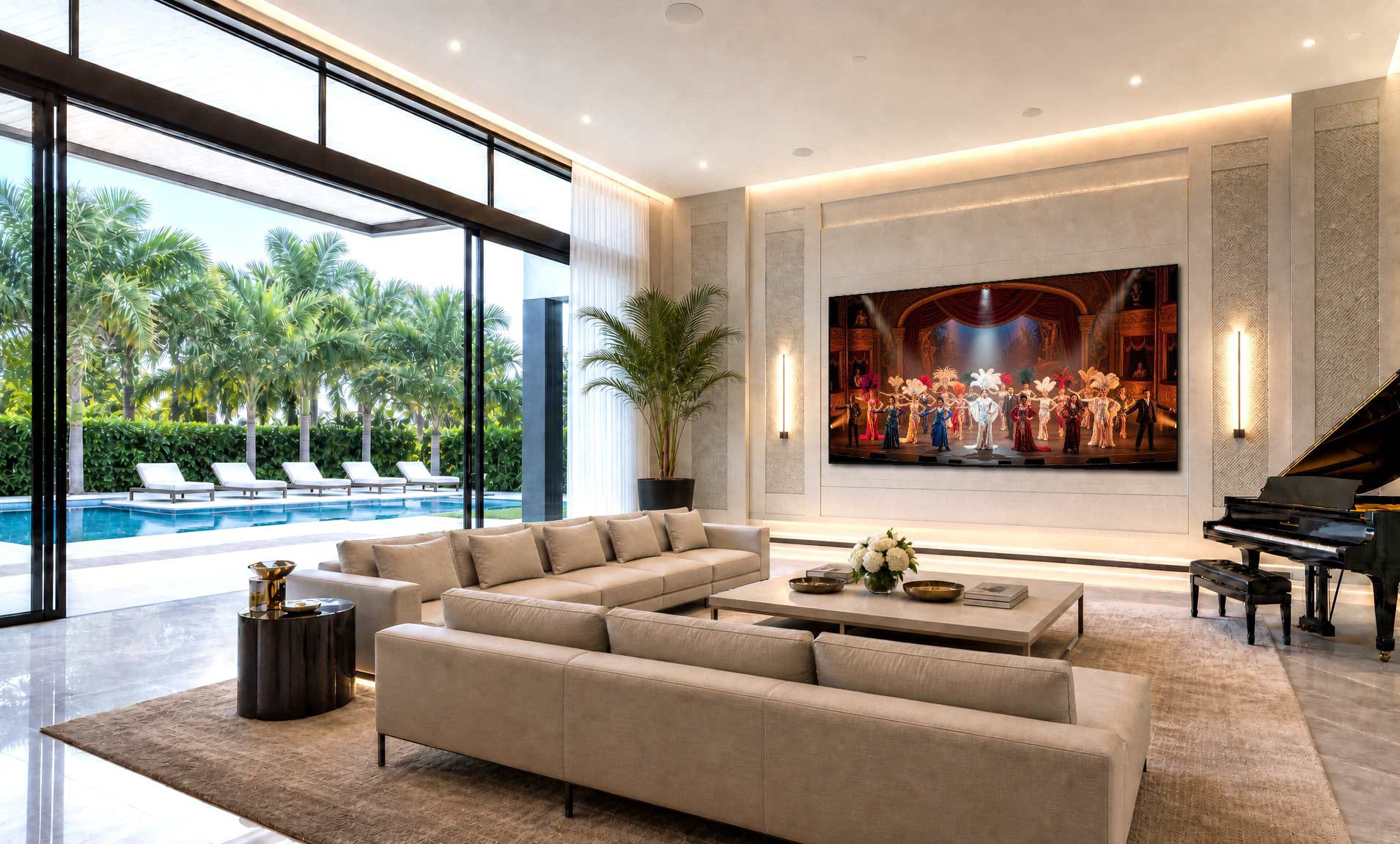
Wisdom Audio is compelling for luxury home theaters, media rooms, and critical listening environments where architectural integration cannot come at the expense of extraordinary sound.
Wisdom’s award-winning loudspeakers include sophisticated in-wall and on-wall solutions utilizing the company’s planar magnetic technology. Depending on the system and room design, speakers can be integrated behind acoustically transparent materials or incorporated discreetly into walls and ceilings.
Bang & Olufsen: When the Speaker Becomes the Artwork
Then there’s an entirely different approach.
What if you don’t hide the speaker at all? What if you make it something people want to look at?
Bang & Olufsen has built an international reputation around the relationship between sound, technology, and industrial design.
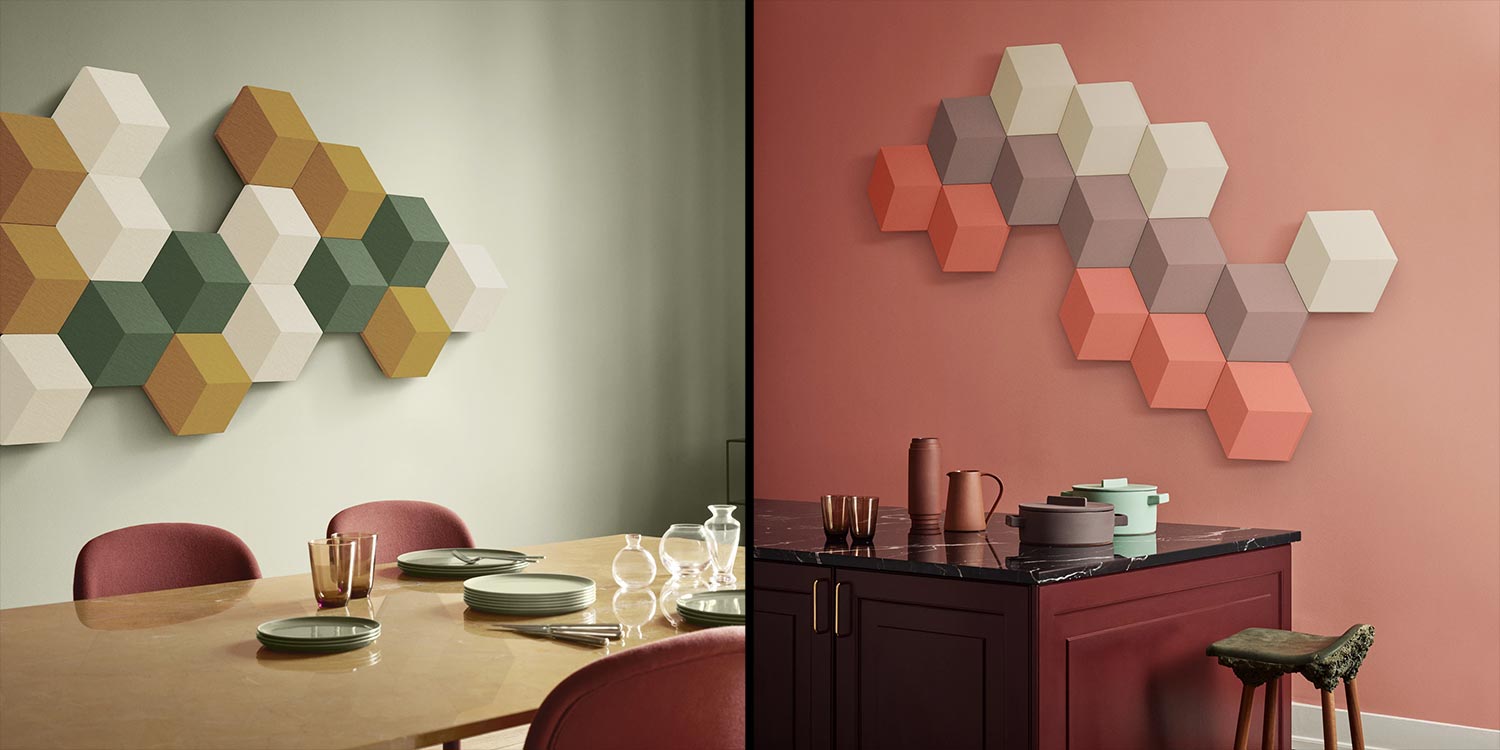
Beosound Shape is an excellent example. The modular wall-mounted audio system uses geometric tiles that can be arranged in different configurations and customized with a selection of colors and textiles.
Rather than looking like an electronic component attached to the wall, the installation can become a dramatic element of the interior.

Planning Architectural Audio Throughout Orlando Homes
For many luxury homeowners, the choice of speaker brand comes first. They may already own and love Bowers & Wilkins, have a long-standing preference for Bang & Olufsen, or be drawn to the performance and design philosophy of Sonance or Wisdom Audio. Once that preference is established, Definitive Electronics can design the whole-home audio system around the brand and the requirements of each space.
A single residence can incorporate different speaker types from the same manufacturer throughout the property. Architectural in-wall or in-ceiling speakers can provide discreet whole-home music, while higher-performance models from the same brand can serve a media room, private theater, or dedicated listening space.
Maintaining a consistent speaker family throughout the home can also help create a more cohesive listening experience as homeowners move from room to room.
Planning a new Orlando home or major renovation?
Bring Definitive Electronics into the project early. Architectural audio is much easier to integrate when speaker locations, construction details, wiring, and equipment requirements are coordinated before the walls and ceilings are finished.
Make the Television Disappear
Large televisions and video walls create another design challenge.
Homeowners increasingly want enormous, immersive displays for movies, sports, and entertainment. Interior designers don’t necessarily want a big black rectangle to become the visual focal point of an otherwise spectacular room.
The solution isn’t always to choose a smaller display.
Sometimes it’s to rethink how the display integrates with the wall space.
Just Video Walls: Large-Scale Video Without Designing the Room Around a Black Screen
Just Video Walls offers technologies that can dramatically change the relationship between a large display and the surrounding interior.
With Camo-Mode, the video wall can mimic the wall’s color and texture, helping it blend into the design when it’s not on.
Mirror-Mode offers another option, allowing the display to look like a mirror when it is not being used as a traditional video display.
When not actively watching a show, digital art displays can showcase your own collection of art or memories, or you can pull from a licensed digital art library.
Homeowners no longer have to choose between an impressive large-format entertainment experience and a beautifully designed room.
👉 Looking to fully integrate your home technology? Schedule a VIP Consultation today!
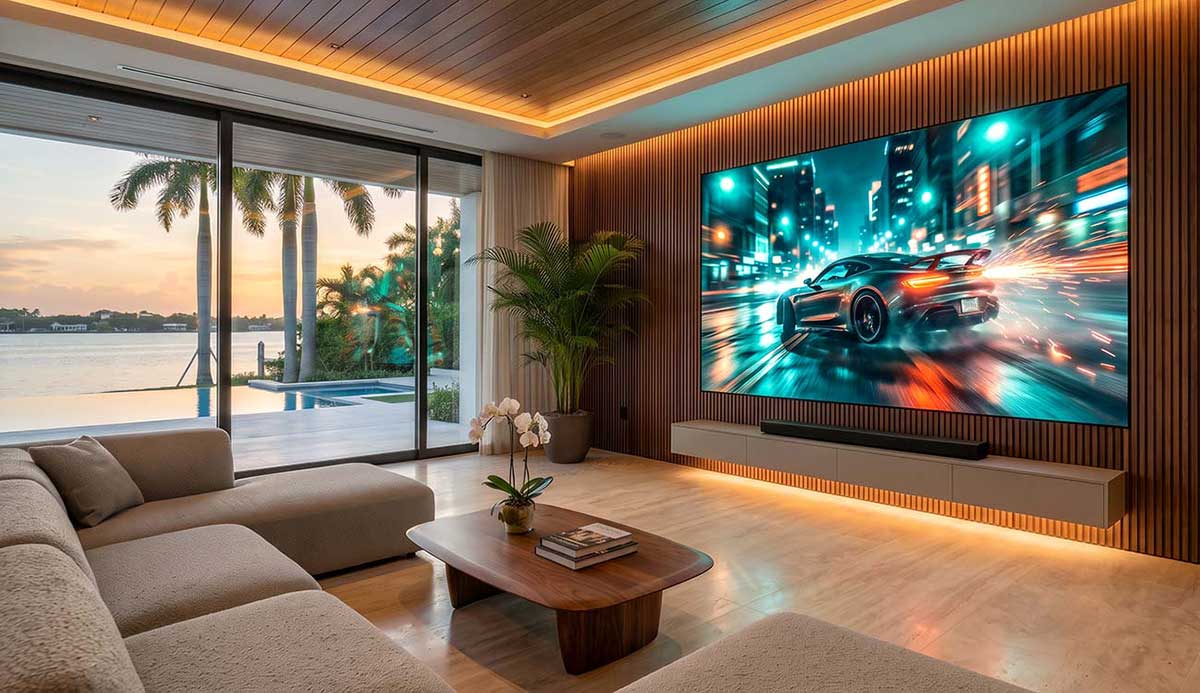
Lutron Automated Shades That Disappear Into the Ceiling
Floor-to-ceiling glass is a defining feature of many contemporary Orlando, Florida homes.
It creates spectacular views and floods interiors with natural light. It can also introduce glare, heat gain, privacy concerns, and prolonged sun exposure for furnishings, flooring, and artwork.
Automated shading provides a sophisticated way to manage those changing conditions.
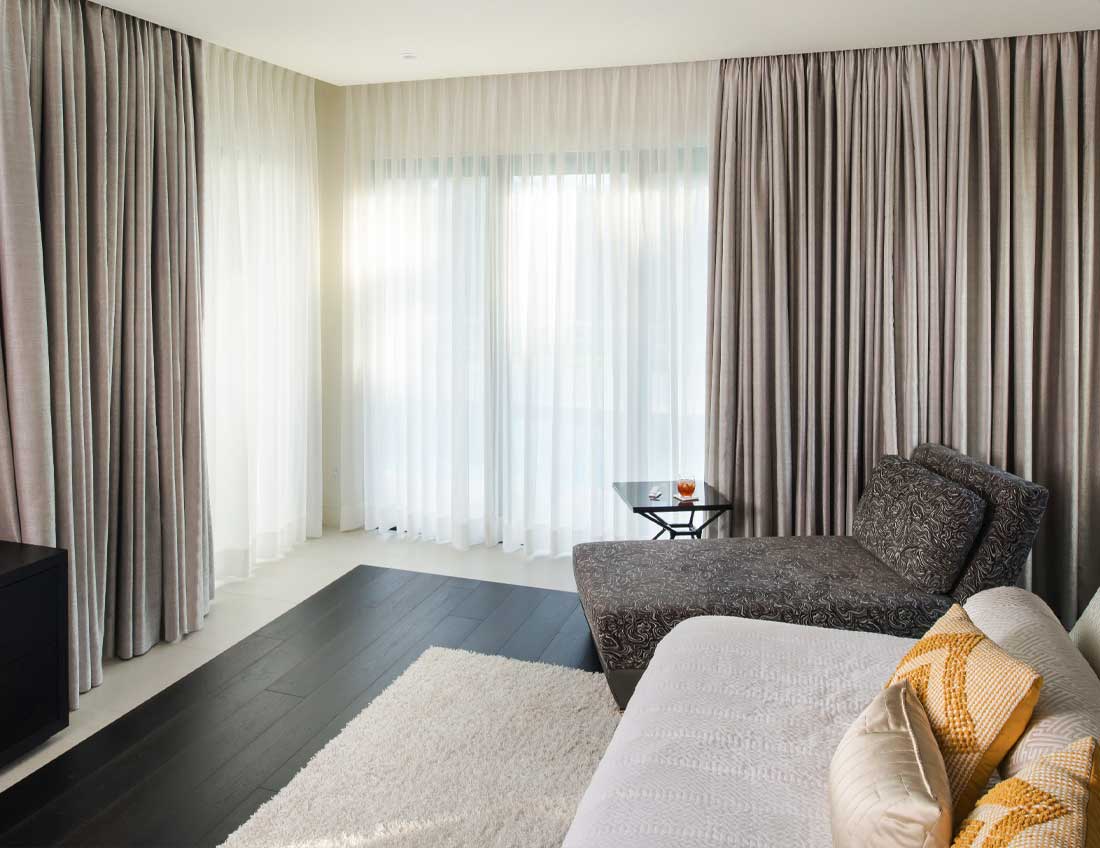
With proper planning, Lutron automated shades and blinds can be integrated into recessed pockets so the shade hardware is concealed within the architecture. When the shades are raised, the window and the view remain the focus.
Instead of manually adjusting window treatments throughout the day, shades can become part of the home’s automated scenes and routines. Depending on the system design, they can operate individually, together, or in coordination with lighting and other home systems.
In an Orlando residence, that means reducing harsh afternoon sunlight, ensuring privacy in the evening, or preparing an entire home for nighttime with a single command.
Concealed Shades Need to Be Planned
A recessed shade pocket is an architectural detail, not something to consider after construction is complete.
The integrator may need to coordinate with the architect, builder, electrician, window-treatment specialist, and/or interior designer to determine pocket dimensions, power, wiring, shade specifications, and access for future service.
That planning is largely invisible when the project is finished. Which is exactly the point.
Basalte: When the Technology Is Visible, Make It Beautiful
Not every piece of home technology can be hidden.
Homeowners still need convenient ways to interact with lighting, shades, climate, music, and other systems.
But that doesn’t mean walls need banks of switches and utilitarian controls.
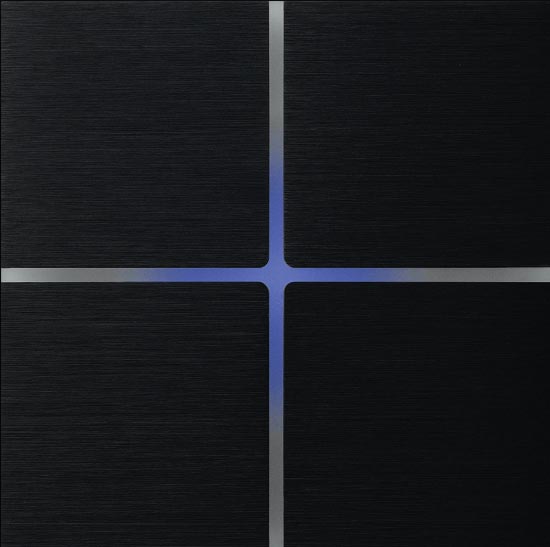
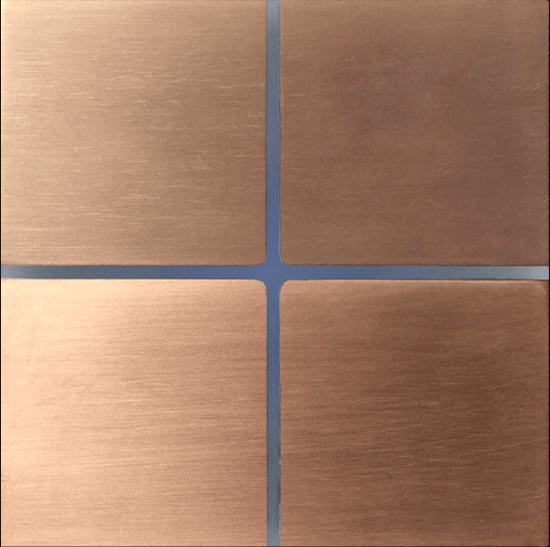
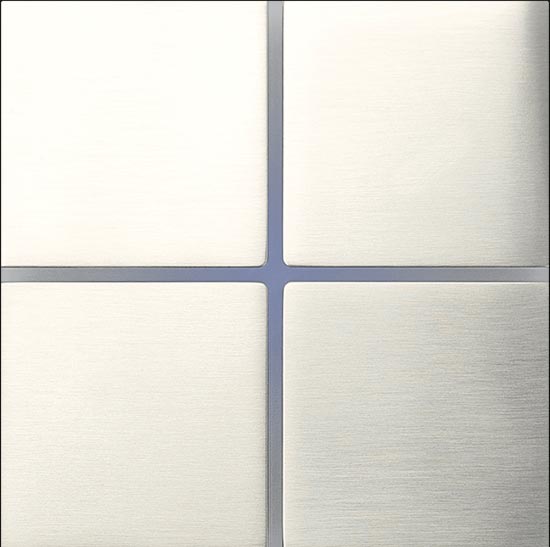
Basalte approaches home control from a distinctly design-conscious perspective. Elegant keypads, touch interfaces, pathway lights, and controls can consolidate functions while complementing sophisticated interiors.
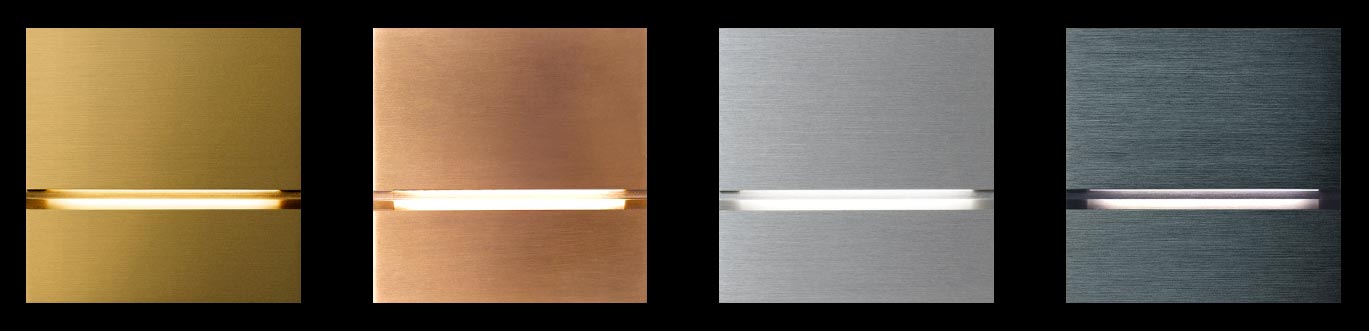
Instead of six switches competing for space on a wall, a thoughtfully designed interface can provide intuitive access to multiple functions.
This is particularly important in luxury residences where architects and interior designers have carefully considered materials, proportions, finishes, and sightlines.

Josh.ai: Intelligent Control That Nearly Disappears
Perhaps one of the most intriguing forms of invisible home technology is an interface that does not require you to touch anything at all.
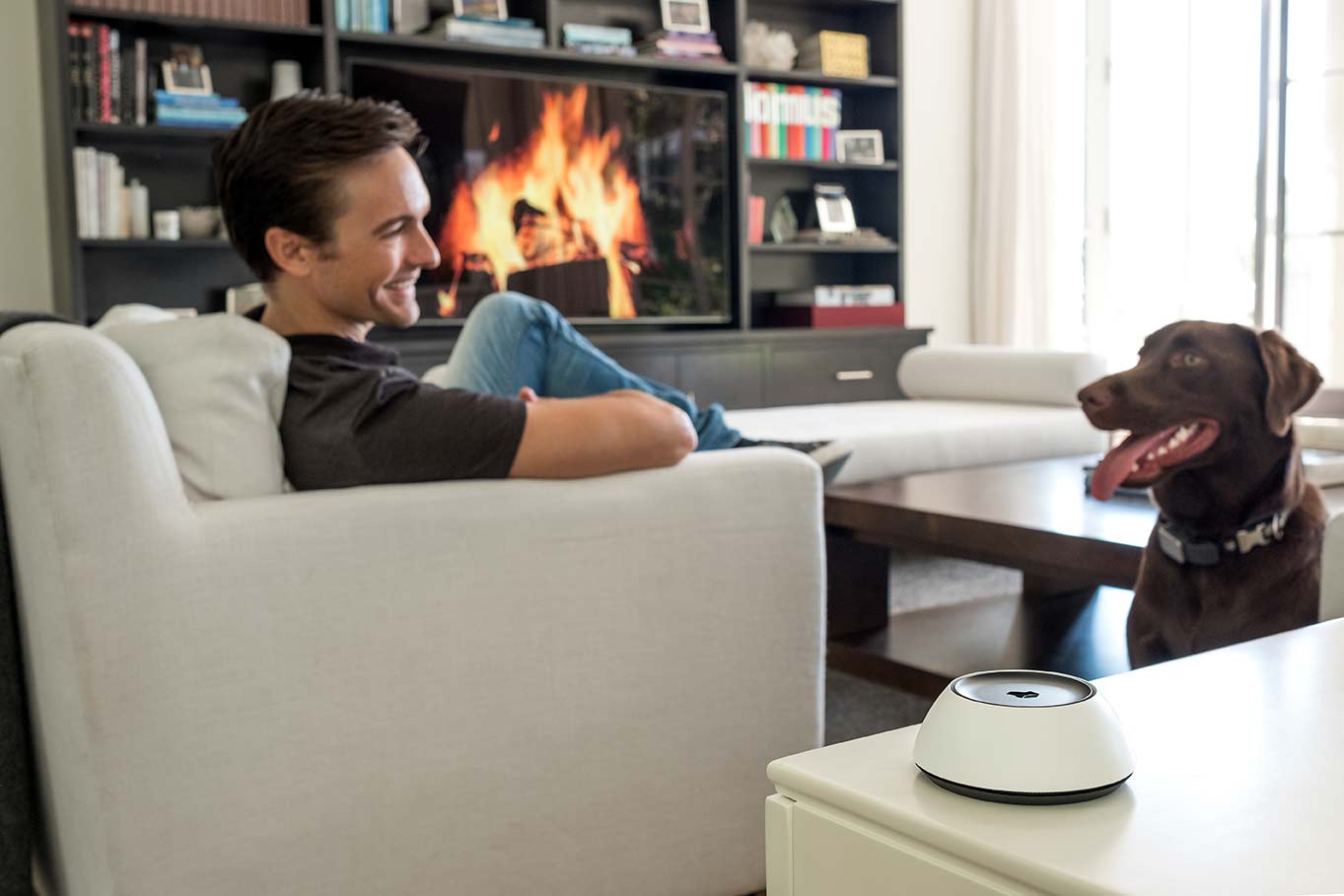
Josh.ai brings natural voice control and artificial intelligence into professionally integrated luxury homes. Rather than finding a touchscreen, opening an app, or locating a remote, homeowners can simply speak naturally to the home.
Depending on the integrated systems, a request might involve lighting, music, television, shades, climate, or an entire automated scene. A homeowner might ask the house to lower the shades, dim the lights, and play music. The complexity happens behind the scenes.
Josh Nano takes the invisible-technology concept even further. Its small architectural microphone can be installed discreetly in a wall or ceiling, providing hands-free control without placing a conventional consumer smart speaker on a countertop in every room.
Josh.ai also places significant emphasis on privacy. For homeowners who want sophisticated AI and voice control inside a private residence (not in the cloud), that distinction matters (a lot!).
👉 Looking to fully integrate your home technology? Schedule a VIP Consultation today!
The Home Technology You Never See May Be the Most Important
A beautifully integrated smart home can appear remarkably simple.
Behind that simplicity may be an enormous amount of engineering.
Processors, amplifiers, audio and video distribution equipment, network switches, power-management equipment, and other electronics can be centralized in professionally designed equipment racks away from primary living spaces.
Structured cabling connects systems throughout the property. The network provides the foundation for connected technology. Control processors coordinate different systems. Power management can help support and protect sensitive electronics.
All of this infrastructure may be largely invisible to the homeowner. And that is precisely what good system design should accomplish.
Invisible Home Technology Should Be Planned Early
Some of the most beautiful technology installations are created long before the equipment arrives.
They begin on architectural plans.
If speakers will disappear into walls, the construction team needs to know where they belong. If Lutron shades will retract into ceiling pockets, the team needs to design those pockets. If a video wall will become part of an architectural feature, its structure, power, ventilation, and service requirements need to be planned for.
If electronics will be centralized, the home needs an appropriate equipment location with sufficient space, power, connectivity, and environmental considerations.
Planning may include:
- Architectural and invisible speaker locations
- Speaker backboxes and construction requirements
- Motorized shade and blind pockets
- Low-voltage wiring
- Electrical requirements
- Lighting-control panels
- Keypad and control locations
- Josh.ai microphone locations
- Television and video-wall recesses
- Structural requirements for displays
- Equipment racks and dedicated technology spaces
- Network infrastructure and wireless access points
- Power management
- Ventilation and cooling
- Outdoor technology
- Future service access
This is why collaboration between the technology integrator, architect, builder, and interior designer is so important.
Each trade affects the others.
When those decisions are made early, technology can become part of the architecture rather than something added later.
Building or renovating in Central Florida?
👉 Schedule a VIP Consultation today!
Can Invisible Technology Be Added to an Existing Orlando Home?
Yes. Invisible, discreet technology isn’t limited to new construction.
However, every existing residence presents different conditions.
Renovating an established Winter Park home may require a very different approach than planning technology for a new estate in Windermere, Golden Oak, or Lake Nona.
Existing wall and ceiling construction, attic access, wiring pathways, window conditions, millwork, and interior finishes all affect what you can reasonably accomplish.
In some rooms, completely invisible speakers may be practical. In others, a discreet architectural speaker may be the better solution.
A television might be concealed or visually transformed without redesigning the entire room. Motorized shades may be added, although creating completely recessed pockets can require additional construction.
The first step is understanding the home and determining where technology can disappear, where it can be discreetly integrated, and where a beautifully designed visible product may actually be the best choice.
👉 Schedule a VIP Consultation with a home technology specialist today!
Frequently Asked Questions About Invisible Home Technology
What is invisible home technology?
Invisible home technology refers to audio, video, shading, control, and other technologies designed or installed to minimize their visual impact on a home’s architecture and interior design. Examples include speakers concealed behind finished surfaces, recessed motorized shades, hidden or visually transformed displays, discreet voice-control microphones, centralized electronics, and minimalist wall controls.
Can speakers really be completely hidden inside a wall?
Yes. Certain invisible speakers, including solutions from Sonance, are specifically designed for installation behind compatible wall or ceiling finishes. When properly installed and finished, no conventional speaker grille is visible in the room.
Do invisible speakers sound as good as traditional speakers?
It depends on the room, listening expectations, and application. Invisible speakers can provide excellent audio while prioritizing architectural concealment. For rooms requiring extremely high output or critical listening performance, Definitive Electronics may recommend other architectural or high-performance speaker solutions. The goal is to select the right technology for the space’s acoustic and design requirements.
Can high-end speakers be integrated into the architecture?
Absolutely. Bowers & Wilkins and Wisdom Audio are examples of premium audio manufacturers offering architectural solutions for projects where sound quality and interior design are both important. Depending on the room, speakers may be installed in walls, ceilings or behind acoustically transparent materials.
Can speakers look like artwork?
Yes. Bang & Olufsen’s Beosound Shape takes a very different approach to architectural audio. Its modular, wall-mounted design can be configured with different layouts, colors, and textiles, making the audio installation an intentional visual feature rather than something the designer needs to conceal.
How can I hide a large television in my living room?
The appropriate solution depends on the display, architecture, and desired experience. Options include architectural recesses, custom millwork, and advanced display technologies designed to minimize the appearance of a large black screen when it’s not in use. Just Video Walls offers solutions such as Camo and Mirror Mode that help large-scale displays integrate more gracefully into sophisticated interiors.
Can motorized shades be completely hidden when they are open?
With proper architectural planning, Lutron motorized shades and blinds can be incorporated into recessed pockets that conceal much of the shade system when raised. Planning these details during architectural design or construction typically provides the greatest flexibility.
Can voice control be hidden in the architecture?
Yes. Josh Nano is a discreet architectural microphone that can be installed in a wall or ceiling. It allows homeowners to use natural voice commands without placing conventional consumer smart speakers throughout the residence.
Where is all the equipment located if I don’t see it?
In professionally designed systems, much of the home’s technology can be centralized in equipment racks located away from the primary living areas. The exact design depends on the property and systems being integrated.
When should invisible technology be planned during construction?
As early as possible. Speaker locations, shade pockets, display recesses, wiring pathways, equipment rooms, lighting controls, network infrastructure, and other architectural requirements can affect multiple trades. Early coordination gives the design team more options and can reduce compromises later in construction.
Can invisible home technology be retrofitted into an existing Orlando home?
Often, yes. The available options depend on the home’s construction, access, existing wiring, finishes, and the extent of renovation the homeowner is willing to undertake. A professional site evaluation can identify where completely hidden technology is practical and where discreet architectural alternatives may be more appropriate.
Should my architect and interior designer work with my home technology integrator?
Yes. Close collaboration can help ensure that technology supports the architectural and interior design rather than competing with it. The integrator can coordinate requirements for speakers, displays, shading, controls, wiring, equipment locations, and other systems while architectural decisions are still being made.
Our Growing Florida Service Areas
Definitive Electronics serves homeowners, builders, designers, and architects across many of Florida’s most distinguished communities, from South Florida’s coastline to Central Florida and the Gulf Coast, including:
Palm Beach County
Palm Beach, Boca Raton, Delray Beach, Jupiter, Jupiter Island, Manalapan, Boynton Beach, Wellington, Highland Beach, Palm Beach Gardens, West Palm Beach, and surrounding communities
Martin County
Stuart, Hobe Sound, Palm City, Sewall’s Point, Hutchinson Island, and nearby waterfront and golf communities
Broward County
Fort Lauderdale, Lighthouse Point, Weston, Coral Springs, Parkland, and coastal and nearby neighborhoods
Miami-Dade County
Miami, Miami Beach, Coral Gables, Key Biscayne, Bal Harbour, Aventura, Coconut Grove, and surrounding communities
Indian River County
Indian River Shores, Orchid, Sebastian, Vero Beach, Wabasso, Windsor
Orange County
Orlando, Windermere, Lake Nona, Winter Park, Isleworth, Keene’s Pointe, Golden Oak, and other Central Florida communities
Tampa Bay Area (Hillsborough and Pinellas Counties)
Tampa, St. Petersburg, Clearwater, Belleair, Palm Harbor, Tierra Verde, and surrounding residential areas
Oceanfront estates, canal properties, private golf communities, luxury condominiums, and new construction projects all benefit from integrated home technology solutions.
Wherever you are within our Florida Service Areas, Definitive Electronics is ready to bring thoughtful design, seamless control, and reliable performance into your space.
Like what you see? Share this post.
Table of Contents
Categories
Less Visible Tech, More Control
Luxury homes are becoming more technologically sophisticated. But that does not mean they need to look more technological.
In many of Orlando’s most beautifully designed homes, technology is present, but not the focal point.
Speakers disappear into walls and ceilings. Motorized shades retract into concealed pockets. Large video displays become part of the interior design instead of dominating it. Rows of switches are replaced by elegant controls. Voice technology becomes nearly invisible. Equipment racks containing the systems that power the home are located well away from primary living spaces.
For homeowners, architects, and interior designers, this is one of the most compelling developments in luxury home technology: enjoying more performance, more automation, and more control with less visual intrusion.
➡️ LEARN MORE: Smart Home Systems in Orlando, Florida
What Is Invisible Home Technology?
Invisible home technology is a design approach that minimizes the visual impact of electronics, wiring, controls, and mechanical components throughout the home.
Some technologies can literally disappear. Speakers can be installed behind finished walls and ceilings. Automated window treatments can retract into recessed ceiling pockets. Wiring, processors, amplifiers, and network equipment can be centralized outside living spaces.
Other technologies cannot completely disappear, but they can be made remarkably discreet. In-wall speakers, minimalist keypads, architectural microphones, and carefully integrated displays allow the interior design to remain the visual priority.
And sometimes, hiding the technology isn’t the answer at all. A beautifully designed speaker or control can become an architectural feature in its own right.
This leads to an important principle in luxury technology design: hide what should disappear. Integrate what should be discreet. Make beautiful what deserves to be seen.
Hidden and Architectural Speakers: Extraordinary Sound Without the Visual Clutter
Whole-home audio presents an interesting design challenge.
Homeowners may want beautiful music throughout the house, and exceptional performance in entertainment spaces, but large conventional speakers may not complement the architecture or interior design.
Today’s architectural audio technologies provide far more options.
Sonance Invisible Speakers: Technology You Hear but Never See
For rooms where even a speaker grille would interrupt the design, Sonance Invisible Series speakers can take concealment to another level.
These speakers are installed into walls or ceilings and covered with compatible finish materials. Once installation and finishing are complete, no conventional speaker grille competes with the decor.
The room remains visually uninterrupted while music emerges naturally into the space.
This approach can be especially appealing in sophisticated living rooms, dining rooms, kitchens, bedrooms, galleries, hallways, and other areas where the interior designer wants clean walls and ceilings.
Bowers & Wilkins Architectural Speakers: Audiophile Heritage Built Into the Home
Not every architectural speaker needs to disappear completely.
Bowers & Wilkins offers in-wall and in-ceiling architectural loudspeakers that allow homeowners to experience the company’s renowned approach to high-performance audio without requiring conventional speakers to occupy floor space.
This can be attractive in sophisticated media rooms, great rooms, and home theaters where sound quality matters enormously but the homeowner and designer want the audio system hidden.
Wisdom Audio: High Performance Meets Architectural Integration
Some projects demand another level of performance.
Wisdom Audio is compelling for luxury home theaters, media rooms, and critical listening environments where architectural integration cannot come at the expense of extraordinary sound.
Wisdom’s award-winning loudspeakers include sophisticated in-wall and on-wall solutions utilizing the company’s planar magnetic technology. Depending on the system and room design, speakers can be integrated behind acoustically transparent materials or incorporated discreetly into walls and ceilings.
Bang & Olufsen: When the Speaker Becomes the Artwork
Then there’s an entirely different approach.
What if you don’t hide the speaker at all? What if you make it something people want to look at?
Bang & Olufsen has built an international reputation around the relationship between sound, technology, and industrial design.
Beosound Shape is an excellent example. The modular wall-mounted audio system uses geometric tiles that can be arranged in different configurations and customized with a selection of colors and textiles.
Rather than looking like an electronic component attached to the wall, the installation can become a dramatic element of the interior.
Planning Architectural Audio Throughout Orlando Homes
For many luxury homeowners, the choice of speaker brand comes first. They may already own and love Bowers & Wilkins, have a long-standing preference for Bang & Olufsen, or be drawn to the performance and design philosophy of Sonance or Wisdom Audio. Once that preference is established, Definitive Electronics can design the whole-home audio system around the brand and the requirements of each space.
A single residence can incorporate different speaker types from the same manufacturer throughout the property. Architectural in-wall or in-ceiling speakers can provide discreet whole-home music, while higher-performance models from the same brand can serve a media room, private theater, or dedicated listening space.
Maintaining a consistent speaker family throughout the home can also help create a more cohesive listening experience as homeowners move from room to room.
Planning a new Orlando home or major renovation?
Bring Definitive Electronics into the project early. Architectural audio is much easier to integrate when speaker locations, construction details, wiring, and equipment requirements are coordinated before the walls and ceilings are finished.
Make the Television Disappear
Large televisions and video walls create another design challenge.
Homeowners increasingly want enormous, immersive displays for movies, sports, and entertainment. Interior designers don’t necessarily want a big black rectangle to become the visual focal point of an otherwise spectacular room.
The solution isn’t always to choose a smaller display.
Sometimes it’s to rethink how the display integrates with the wall space.
Just Video Walls: Large-Scale Video Without Designing the Room Around a Black Screen
Just Video Walls offers technologies that can dramatically change the relationship between a large display and the surrounding interior.
With Camo-Mode, the video wall can mimic the wall’s color and texture, helping it blend into the design when it’s not on.
Mirror-Mode offers another option, allowing the display to look like a mirror when it is not being used as a traditional video display.
When not actively watching a show, digital art displays can showcase your own collection of art or memories, or you can pull from a licensed digital art library.
Homeowners no longer have to choose between an impressive large-format entertainment experience and a beautifully designed room.
👉 Looking to fully integrate your home technology? Schedule a VIP Consultation today!
Lutron Automated Shades That Disappear Into the Ceiling
Floor-to-ceiling glass is a defining feature of many contemporary Orlando, Florida homes.
It creates spectacular views and floods interiors with natural light. It can also introduce glare, heat gain, privacy concerns, and prolonged sun exposure for furnishings, flooring, and artwork.
Automated shading provides a sophisticated way to manage those changing conditions.
With proper planning, Lutron automated shades and blinds can be integrated into recessed pockets so the shade hardware is concealed within the architecture. When the shades are raised, the window and the view remain the focus.
Instead of manually adjusting window treatments throughout the day, shades can become part of the home’s automated scenes and routines. Depending on the system design, they can operate individually, together, or in coordination with lighting and other home systems.
In an Orlando residence, that means reducing harsh afternoon sunlight, ensuring privacy in the evening, or preparing an entire home for nighttime with a single command.
Concealed Shades Need to Be Planned
A recessed shade pocket is an architectural detail, not something to consider after construction is complete.
The integrator may need to coordinate with the architect, builder, electrician, window-treatment specialist, and/or interior designer to determine pocket dimensions, power, wiring, shade specifications, and access for future service.
That planning is largely invisible when the project is finished. Which is exactly the point.
Basalte: When the Technology Is Visible, Make It Beautiful
Not every piece of home technology can be hidden.
Homeowners still need convenient ways to interact with lighting, shades, climate, music, and other systems.
But that doesn’t mean walls need banks of switches and utilitarian controls.
Basalte approaches home control from a distinctly design-conscious perspective. Elegant keypads, touch interfaces, pathway lights, and controls can consolidate functions while complementing sophisticated interiors.
Instead of six switches competing for space on a wall, a thoughtfully designed interface can provide intuitive access to multiple functions.
This is particularly important in luxury residences where architects and interior designers have carefully considered materials, proportions, finishes, and sightlines.
Josh.ai: Intelligent Control That Nearly Disappears
Perhaps one of the most intriguing forms of invisible home technology is an interface that does not require you to touch anything at all.
Josh.ai brings natural voice control and artificial intelligence into professionally integrated luxury homes. Rather than finding a touchscreen, opening an app, or locating a remote, homeowners can simply speak naturally to the home.
Depending on the integrated systems, a request might involve lighting, music, television, shades, climate, or an entire automated scene. A homeowner might ask the house to lower the shades, dim the lights, and play music. The complexity happens behind the scenes.
Josh Nano takes the invisible-technology concept even further. Its small architectural microphone can be installed discreetly in a wall or ceiling, providing hands-free control without placing a conventional consumer smart speaker on a countertop in every room.
Josh.ai also places significant emphasis on privacy. For homeowners who want sophisticated AI and voice control inside a private residence (not in the cloud), that distinction matters (a lot!).
👉 Looking to fully integrate your home technology? Schedule a VIP Consultation today!
The Home Technology You Never See May Be the Most Important
A beautifully integrated smart home can appear remarkably simple.
Behind that simplicity may be an enormous amount of engineering.
Processors, amplifiers, audio and video distribution equipment, network switches, power-management equipment, and other electronics can be centralized in professionally designed equipment racks away from primary living spaces.
Structured cabling connects systems throughout the property. The network provides the foundation for connected technology. Control processors coordinate different systems. Power management can help support and protect sensitive electronics.
All of this infrastructure may be largely invisible to the homeowner. And that is precisely what good system design should accomplish.
Invisible Home Technology Should Be Planned Early
Some of the most beautiful technology installations are created long before the equipment arrives.
They begin on architectural plans.
If speakers will disappear into walls, the construction team needs to know where they belong. If Lutron shades will retract into ceiling pockets, the team needs to design those pockets. If a video wall will become part of an architectural feature, its structure, power, ventilation, and service requirements need to be planned for.
If electronics will be centralized, the home needs an appropriate equipment location with sufficient space, power, connectivity, and environmental considerations.
Planning may include:
- Architectural and invisible speaker locations
- Speaker backboxes and construction requirements
- Motorized shade and blind pockets
- Low-voltage wiring
- Electrical requirements
- Lighting-control panels
- Keypad and control locations
- Josh.ai microphone locations
- Television and video-wall recesses
- Structural requirements for displays
- Equipment racks and dedicated technology spaces
- Network infrastructure and wireless access points
- Power management
- Ventilation and cooling
- Outdoor technology
- Future service access
This is why collaboration between the technology integrator, architect, builder, and interior designer is so important.
Each trade affects the others.
When those decisions are made early, technology can become part of the architecture rather than something added later.
Building or renovating in Central Florida?
👉 Schedule a VIP Consultation today!
Can Invisible Technology Be Added to an Existing Orlando Home?
Yes. Invisible, discreet technology isn’t limited to new construction.
However, every existing residence presents different conditions.
Renovating an established Winter Park home may require a very different approach than planning technology for a new estate in Windermere, Golden Oak, or Lake Nona.
Existing wall and ceiling construction, attic access, wiring pathways, window conditions, millwork, and interior finishes all affect what you can reasonably accomplish.
In some rooms, completely invisible speakers may be practical. In others, a discreet architectural speaker may be the better solution.
A television might be concealed or visually transformed without redesigning the entire room. Motorized shades may be added, although creating completely recessed pockets can require additional construction.
The first step is understanding the home and determining where technology can disappear, where it can be discreetly integrated, and where a beautifully designed visible product may actually be the best choice.
👉 Schedule a VIP Consultation with a home technology specialist today!
Frequently Asked Questions About Invisible Home Technology
What is invisible home technology?
Invisible home technology refers to audio, video, shading, control, and other technologies designed or installed to minimize their visual impact on a home’s architecture and interior design. Examples include speakers concealed behind finished surfaces, recessed motorized shades, hidden or visually transformed displays, discreet voice-control microphones, centralized electronics, and minimalist wall controls.
Can speakers really be completely hidden inside a wall?
Yes. Certain invisible speakers, including solutions from Sonance, are specifically designed for installation behind compatible wall or ceiling finishes. When properly installed and finished, no conventional speaker grille is visible in the room.
Do invisible speakers sound as good as traditional speakers?
It depends on the room, listening expectations, and application. Invisible speakers can provide excellent audio while prioritizing architectural concealment. For rooms requiring extremely high output or critical listening performance, Definitive Electronics may recommend other architectural or high-performance speaker solutions. The goal is to select the right technology for the space’s acoustic and design requirements.
Can high-end speakers be integrated into the architecture?
Absolutely. Bowers & Wilkins and Wisdom Audio are examples of premium audio manufacturers offering architectural solutions for projects where sound quality and interior design are both important. Depending on the room, speakers may be installed in walls, ceilings or behind acoustically transparent materials.
Can speakers look like artwork?
Yes. Bang & Olufsen’s Beosound Shape takes a very different approach to architectural audio. Its modular, wall-mounted design can be configured with different layouts, colors, and textiles, making the audio installation an intentional visual feature rather than something the designer needs to conceal.
How can I hide a large television in my living room?
The appropriate solution depends on the display, architecture, and desired experience. Options include architectural recesses, custom millwork, and advanced display technologies designed to minimize the appearance of a large black screen when it’s not in use. Just Video Walls offers solutions such as Camo and Mirror Mode that help large-scale displays integrate more gracefully into sophisticated interiors.
Can motorized shades be completely hidden when they are open?
With proper architectural planning, Lutron motorized shades and blinds can be incorporated into recessed pockets that conceal much of the shade system when raised. Planning these details during architectural design or construction typically provides the greatest flexibility.
Can voice control be hidden in the architecture?
Yes. Josh Nano is a discreet architectural microphone that can be installed in a wall or ceiling. It allows homeowners to use natural voice commands without placing conventional consumer smart speakers throughout the residence.
Where is all the equipment located if I don’t see it?
In professionally designed systems, much of the home’s technology can be centralized in equipment racks located away from the primary living areas. The exact design depends on the property and systems being integrated.
When should invisible technology be planned during construction?
As early as possible. Speaker locations, shade pockets, display recesses, wiring pathways, equipment rooms, lighting controls, network infrastructure, and other architectural requirements can affect multiple trades. Early coordination gives the design team more options and can reduce compromises later in construction.
Can invisible home technology be retrofitted into an existing Orlando home?
Often, yes. The available options depend on the home’s construction, access, existing wiring, finishes, and the extent of renovation the homeowner is willing to undertake. A professional site evaluation can identify where completely hidden technology is practical and where discreet architectural alternatives may be more appropriate.
Should my architect and interior designer work with my home technology integrator?
Yes. Close collaboration can help ensure that technology supports the architectural and interior design rather than competing with it. The integrator can coordinate requirements for speakers, displays, shading, controls, wiring, equipment locations, and other systems while architectural decisions are still being made.
Our Growing Florida Service Areas
Definitive Electronics serves homeowners, builders, designers, and architects across many of Florida’s most distinguished communities, from South Florida’s coastline to Central Florida and the Gulf Coast, including:
Palm Beach County
Palm Beach, Boca Raton, Delray Beach, Jupiter, Jupiter Island, Manalapan, Boynton Beach, Wellington, Highland Beach, Palm Beach Gardens, West Palm Beach, and surrounding communities
Martin County
Stuart, Hobe Sound, Palm City, Sewall’s Point, Hutchinson Island, and nearby waterfront and golf communities
Broward County
Fort Lauderdale, Lighthouse Point, Weston, Coral Springs, Parkland, and coastal and nearby neighborhoods
Miami-Dade County
Miami, Miami Beach, Coral Gables, Key Biscayne, Bal Harbour, Aventura, Coconut Grove, and surrounding communities
Indian River County
Indian River Shores, Orchid, Sebastian, Vero Beach, Wabasso, Windsor
Orange County
Orlando, Windermere, Lake Nona, Winter Park, Isleworth, Keene’s Pointe, Golden Oak, and other Central Florida communities
Tampa Bay Area (Hillsborough and Pinellas Counties)
Tampa, St. Petersburg, Clearwater, Belleair, Palm Harbor, Tierra Verde, and surrounding residential areas
Oceanfront estates, canal properties, private golf communities, luxury condominiums, and new construction projects all benefit from integrated home technology solutions.
Wherever you are within our Florida Service Areas, Definitive Electronics is ready to bring thoughtful design, seamless control, and reliable performance into your space.